Science, a puppy, and Hemingway

Even though I finished college, my life as I know it is not, in fact, over. I’m enjoying not being stressed about assignments and due dates. I’m sure once I start working a job that I’m really interested in, these things will return, but for now, I’m enjoying the simplicity of my data entry job.

I ended up completing two creative projects for my final two English classes. I have a history of being underwhelmed while writing academic papers. I’m not quite sure how people can get excited about them. The week of finals, I was up till 2am at least three nights writing and revising my two projects. I had direction and purpose. I started one project fully intending to write about my experience as a first generation college student by comparing my interactions with my mother with those of Bill and his father as I saw on a roadtrip to Oklahoma. I had it planned out masterfully. I would use the conversations about cicadas to illustrate the two relationships. As I wrote it though, it turned into something completely different. It turned out to be a fairly revealing piece about my wanting to prove my intelligence to his parents. I was amazed to see it take form. As I wrote it, I needed to do some research and actually ended up needing to meet with Wyatt, Bill’s father, to solidify dialogue and learn more about him as a person and, in turn, develop him as a character. I had never taken a project so seriously.

I learned something about myself while writing it; I feel silly for not knowing things and then fail to educate myself about them. By doing that, I set constantly set myself up for feeling foolish. I realized that I am curious about things, but that I rarely satisfy that curiosity. I haven’t figured out if I’m just lazy or if I enjoy living a life of mystery. I’m sure I’m just lazy. Living a life of mystery is just another way of saying I’m allowing myself to remain uninformed. Regardless, it’s not how I want to live my life.

For the better part of the first year we dated, whenever Bill would bring anything remotely scientific, I would listen while staring blankly. Then I would tell him, “I don’t care about science. It just doesn’t interest me.” I’m not sure when, but at some point, I started becoming fascinated by his explanations of things. I envied the way he could articulate a point or reason for something. Initially, I might not be interested in biology on the cellular level, but I am fascinated by the products of the cells’ activities – the possibilities of new species and traits, or the prevalence of certain behaviors and tendencies. I’ve realized that it’s reassuring to have explanations for these things. I think there’s a recognizable comfort in not knowing things. It’s a blissful ignorance, but it pales in comparison to the excitement of discovering ways new information fits into and alters your previously conceived notions.

On a completely different note, here’s an adorable dog.

I’m going down to Oklahoma again next month to visit Bill. I’m half expecting him to buy me a puppy similar to this one for Valentine’s Day. (no I’m not) It was wonderful to have him here for Christmas. It’s impossible to express the contentment I felt having him near in a blog post. It fully deserves its own essay.

On another note, I’ve been reading A Moveable Feast by Hemingway. I wish I had read it years ago. He had such an disciplined and systematic approach to his writing. I too often allow myself to get distracted and break concentration. I think I just illustrated this by sharing a puppy picture and including a completely unrelated paragraph about Bill. Instead of ending a writing session when inspiration left him or when the piece was completed, he stopped in the middle of it – where he knew what would come next, that way he could easily return to his work the next day. It’s such an obvious solution to writer’s block, I don’t know why I had never thought of it before. Anyway, I don’t desire to be a womanizing megalomaniac like Hemingway, but I do want to be as disciplined and brilliantly succinct as he.

I obviously have a long way to go.

My life as I know it will be over.

I had a strange realization the other day, one that shouldn’t exactly be a realization. As of December 16, I’m no longer going to be a college student.

It’s all I’ve done for the last five years. I’m having an existential crisis. Am I entitled to that?

I’m preparing to go visit Bill in a few days. In fact, I will be seeing him in just over 48 hours. I haven’t seen him since September. It’s been over two months since I’ve kissed him, hugged him, touched him, or woke up to him talking in his sleep. I’m flying into Oklahoma City around 10pm on Tuesday night. I’ve never gotten off an airplane to be greeted by a boyfriend. I’ve been trying to imagine the scene. I’m sure I’ll be tired since I’m working in the morning, and traveling by plane is oddly exhausting. However, if I don’t have a five year old kicking the back of my seat like my last flight, I’ll consider this one a success. I’ll exit the terminal and search for Bill, hauling my carry on bag and rolling suitcase and then I’ll see him and cry. Big gooey tears that are embarrassing but I won’t care because I’ll finally actually be seeing Bill in the flesh rather than on my computer screen and for the first time in months my tears will be on his shirt and not on my sleeve.

But maybe I won’t cry. Maybe I’ll just smile till my cheeks hurt and then we’ll kiss and I’ll blush for the rest of the night. 

Because I’m not there yet, I’m wanting the next two days to pass by as quickly as possible. I’m becoming acutely aware of how swiftly time moves. I’ll be in Oklahoma for about a week, then after that, I’ll have just three weeks left as a college student. That means I will be cramming an enormous amount of work into three weeks. I have several books I need to read. While I’m doing this, I need to read critically so I can write a comparative paper for my African American Women Writers class – I’m thinking of comparing a Lorrie Moore story with one of Danielle Evans’s stories. Which two stories, I’m not sure. I read Moore’s Self Help a few months ago, and I’m not through Evans’s collection. I’m anticipating that by rereading Moore’s book and completing Evan’s collection, I’ll have a sudden epiphany and I’ll write a brilliant paper. I also need to write a paper about Pat Barker’s Regeneration, which as far as I can tell, 2/3 of the way through, has no plot. So far I’ve picked up a few things about a stuttering psychiatrist who has some homosexual tendencies and a few WWI soldiers getting day passes. It’s really a pretty boring book and because it’s near impossible to finish reading, I’m going to have a very difficult time writing about it. I also have to finish a draft of my seminar project – a piece of creative nonfiction that’s turning into a pretty personal endeavor – and then revise it until it’s wonderful.

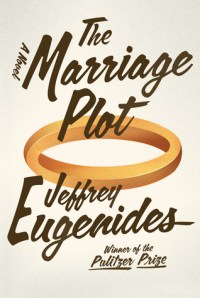
While I have all of these books to read and also biology and anthropology to study, I decided to read another book. The Marriage Plot by Jeffrey Eugenides. An editorial review on Amazon reads:

Even among authors, Jeffrey Eugenides possesses a rare talent for being able to inhabit his characters. In The Marriage Plot, his third novel and first in ten years (following the Pulitzer Prize-winning Middlesex), Eugenides describes a year or so in the lives of three college seniors at Brown in the early 80s. There is Madeleine, a self-described “incurable romantic” who is slightly embarrassed at being so normal. There is Leonard, a brilliant, temperamental student from the Pacific Northwest. And completing the triangle is Mitchell, a Religious Studies major from Eugenides’ own Detroit. What follows is a book delivered in sincere and genuine prose, tracing the end of the students’ college days and continuing into those first, tentative steps toward true adulthood. This is a thoughtful and at times disarming novel about life, love, and discovery, set during a time when so much of life seems filled with deep portent.

The “tracing the end of the students’ college days and continuing into those first, tentative steps toward true adulthood” bit was the thing that really sold me. I’ve been sort of obsessed with books like this lately. I want how-to texts to tell me how to be an adult, because I don’t really know what it’s like to not be a student. I’m no longer looking to books for escapism – I’m looking to them for comradery, even if the heroines of these fictions don’t figure it out. Lorrie Moore’s characters are usually women just on the verge of a breakdown, and the Madison-area college student in A Gate at the Stairs felt like a best friend on the pages. About thirty pages into The Marriage Plot, I’m beginning to wonder when Eugenides was able to notate my thoughts while I sat through my English classes. Consider such gems like:

She’d become an English major for the purest and dullest of reasons: because she loved to read. (pg 20, from the Kindle edition)

That left a large contingent of people majoring in English by default. Because they weren’t left-brained enough for science, because history was too dry, philosophy too difficult, geology too petroleum-oriented, and math too mathematical—because they weren’t musical, artistic, financially motivated, or really all that smart, these people were pursuing university degrees doing something no different from what they’d done in first grade: reading stories. English was what people who didn’t know what to major in majored in. (pg 21, from the Kindle edition)

But after three solid years of taking literature courses, Madeleine had nothing like a firm critical methodology to apply to what she read. Instead she had a fuzzy, unsystematic way of talking about books. It embarrassed her to hear the things people said in class. And the things she said. I felt that. It was interesting the way Proust. I liked the way Faulkner. (pg 24, from the Kindle edition)

I’m really hoping that Madeleine ends up figuring her life out so I can follow suit. However, since it’s a Eugenides novel, she’ll probably have a much deeper existential meltdown, then commit suicide or her whole family will die. Don’t worry though, it will be done in the most brilliant of fashions.

If I were really smart, I would save this and any other leisure reading material for December 17.

On meeting David Sedaris

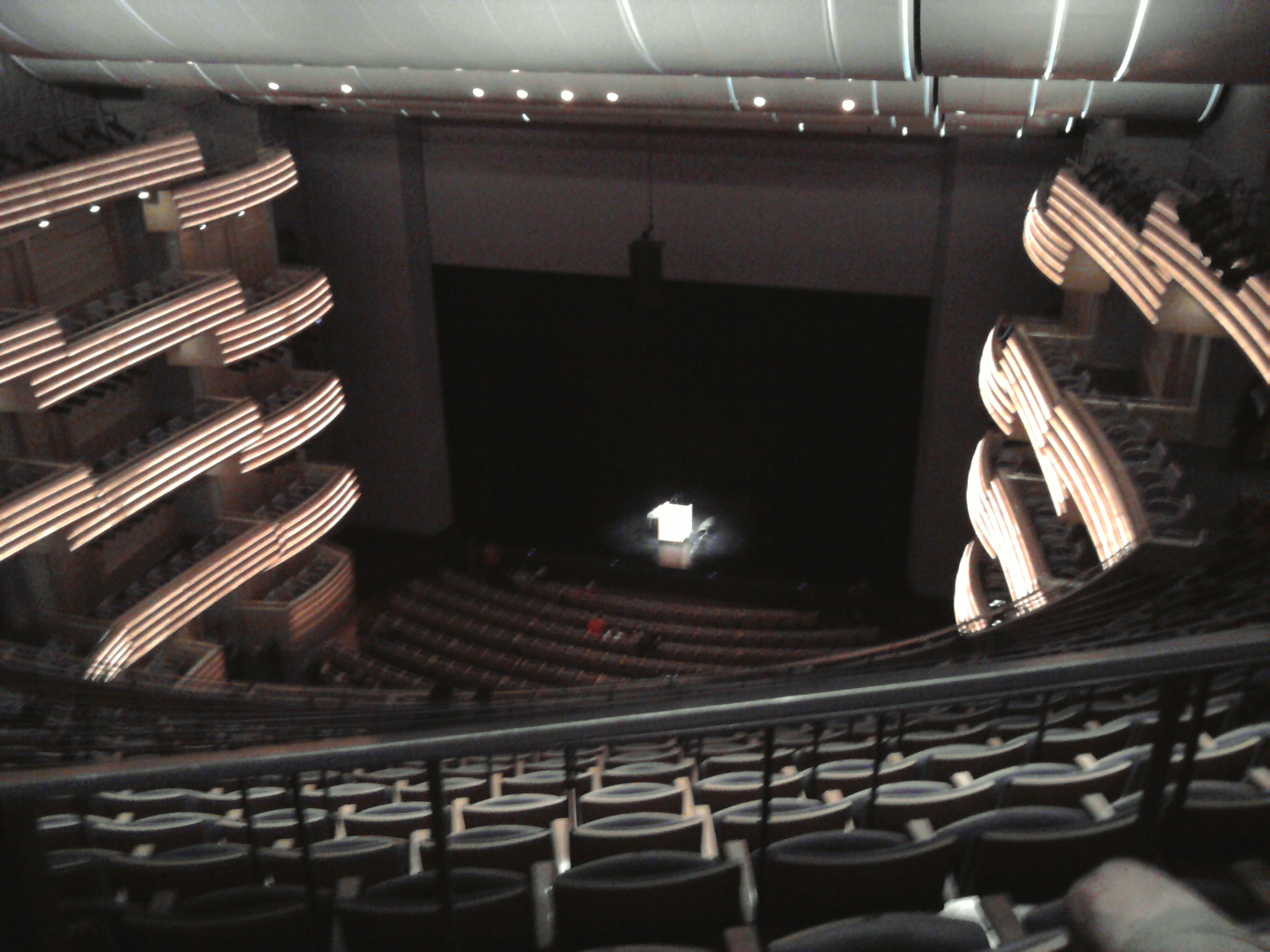
I wonder what it would be like to stand behind a podium knowing that everybody in front of you paid at least $30 to hear the things floating around in your head. I got to the Overture Center about 40 minutes before the show started. There was already a line for book signing. And there was a line for refreshments. By refreshments they meant cocktails. Faced with the two options, I wavered for only a moment before deciding to get in line for the book signing. Unfortunately, some guy wearing earbuds and diligently updating his facebook on his iphone told us he needed to limit the pre-show signing, but they would return after and David would be there as long as it took. So, I abandoned that line and wandered over by the elevator to get to my seat.

Soon enough, I was in my seat, marveling at my view. If I had been there to see a performance, it wouldn’t have been great, but I was just there to watch a guy read. The novelty was the fact that I now had a face and body connected to the voice I had heard while listening to his audiobooks. I had a silly grin for the first piece, I Will Not Be Running for President, for that fact alone. Of course, it was wry and clever the way most of his pieces are, but the fact was that I was there. I was in the same room (if you can call that a room) as this man. The idea of celebrity is a funny thing. I never really think about it, because I’m never interacting with celebrities.

I was in this room with the same man who had changed the way I thought about writing. Prior to reading his work, I hadn’t had any real desire to look into memoir or personal narratives. Granted, he doesn’t write memoir, he writes essays, but the concept is still the same. He made me realize that all the journals I had been writing in since fifth grade could actually amount to something. I spent years thinking I had to write either fiction or poetry. Since I don’t do poetry, I was limited to fiction. And most of my fiction closely resembled my life, which felt like cheating. I realized I sort of adored him for that – for making me realize there was potential in the thing I felt most driven to do. By the same token, I resented myself just a little for not having realized it on my own accord. So, while I love what he does, I love the the ways in which I have changed since reading his work.

I wonder if this is what other people say when they meet celebrities. I’m trying to imagine now, what it would be like to meet a movie star. I don’t feel compelled to make a connection to someone in a movie. Sure, I think Patrick Dempsey is good looking, but what would I ask him? What would I want to know about him? And while Kristin Davis plays my favorite character on Sex and the City, I don’t want to meet her. I might get a kick out of seeing them at the grocery store, but other than that, what would possibly come from that?

I stepped out a few moments before the show was done so I could get in line for the book signing. I bought Holidays on Ice (which I haven’t read. I’ve only heard “Santaland Diaries” on This American Life). I was the fifth person in line. When I saw him crossing the lobby to the table, I realized this was both good and bad. Good because it meant I would get home before midnight. Bad because I still hadn’t really given any thought to what I was planning on saying to him. I remembered that he likes to collect jokes from people, but I couldn’t think of anything other than bad orchestra jokes. (How do you get a cello section to play fortissimo? Tell them to play pianissimo espressivo. What’s the difference between a viola and a violin? A violin burns faster.) So I went with the first thing that came to my mind. 

I handed him the book, and as he signed, I said, “I don’t have any jokes for you, but I do have something to show you.” I clasped my hands together and pressed the thumbs side by side. “I have two thumbs that are completely different.”

At that point, he looked up from the page. “Oh my gosh! You do! They’re completely different! How did that happened?”

“This one is my dad’s, and this one is my mom’s.” I wiggled each thumb accordingly.

To my delight, he pulled out his pocket notebook and wrote “Ashley 2 thumbs”.

The goal was to get David Sedaris to remember me. I doubt it will amount to anything, but maybe he’ll flip through it on a flight and say, “Oh yeah. That girl with the funny thumbs.”

I am an excellent college student.

I have this condition. I find I’m willing to do anything other than whatever it is that I need to do. I’m supposed to be reading The Dying Ground, which is a hip hop novel for my African American Women Writers class (from here on known as AAWW) . Don’t ask me what a hip hop novel is because I don’t know – I haven’t started reading it yet. I’m supposed to have ten chapters read by at 1:20 tomorrow afternoon. I’m also supposed to finish reading Lorine Niedecker’s collection of poetry, but as I found out last week, it takes about ten minutes to get through 50 pages of imagist poetry, and there’s no need to really understand it anyway. I’m not expecting this novel to be bad. I’m not expecting to hate it. I would just rather do anything else, including reorganizing my music files on my computer, watching two seasons of House (I watched the first episode of the season and have no idea how he ended up in prison), making sure there are no typos in my history or biology notes, reading ahead in my anthropology textbook, or reading the case study on the Yanomamo: A Fierce People. I read the first twenty pages last night.

A high capacity for rage, a quick flash point, and a willingness to use violence to obtain one’s ends are considered desirable traits. Much of the behavior of the Yanomamo can be described as brutal, cruel, treacherous, in the value-laden terms of our own vocabulary. The Yanomamo themselves, however, as Napoleon Chagnon came to intimately know them in the year and a half he lived with them, do not all appear to be mean and treacherous. As individuals, they seem to be people playing their own cultural game, with internal feelings that at times may be quite divergent from the demands placed upon them by their culture. This case study furnished valuable data for phrasing questions about the relationship between the individual and his culture.

The Yanomamo appear to be constantly on the verge of extranormal behavior, as we define it, and their almost daily use of hallucinogenic drugs reinforces these drives to what might seem to the outside observer to be the limits of human capacity. Life in their villages is noisy, punctuated by outbursts of violence, threatened by destruction by enemies. To the ethnographer it is frightening, frustrating, disgusting, exciting, and rewarding, and in this case study the ethnographer lets the reader know how he feels. His honest reaction helps us, as interested outsiders, to know the Yanomamo.

You can’t tell me that doesn’t sound interesting. Here are these people, living in small groups, doing drugs and attacking each other. It sounds full of that sensational crap that gets my attention whenever I flip past the Discovery Channel and they’re having a marathon of shows on human sexuality.

Midterms are overwhelming. I had two tests this morning – history and biology. I crammed for both of them over the course of the last three nights because I am a smart person. Neither test was very bad, but as I’ve made it clear, my mind practically refuses to retain scientific information, especially when describing things like cell division and the Calvin cycle. I think they mentioned ATP and NAD+ somewhere in there, but I’m not sure about the significance.

I completed a take home test for AAWW. It was an essay and it enabled me to bust out my amazing outlining skills. I really hope that’s a skill employers look for, because I am great at it. Now, all I need to do is read, but instead I’d rather document my procrastination skills on my blog.

I am an excellent college student.